
June is Pride Month. A time to celebrate identity, honour those we have lost and affirm that every life, in all its colour and complexity, deserves to be remembered with dignity and truth. This Pride Month, we want to talk honestly about what truly inclusive funerals look like – and how we can all do better.
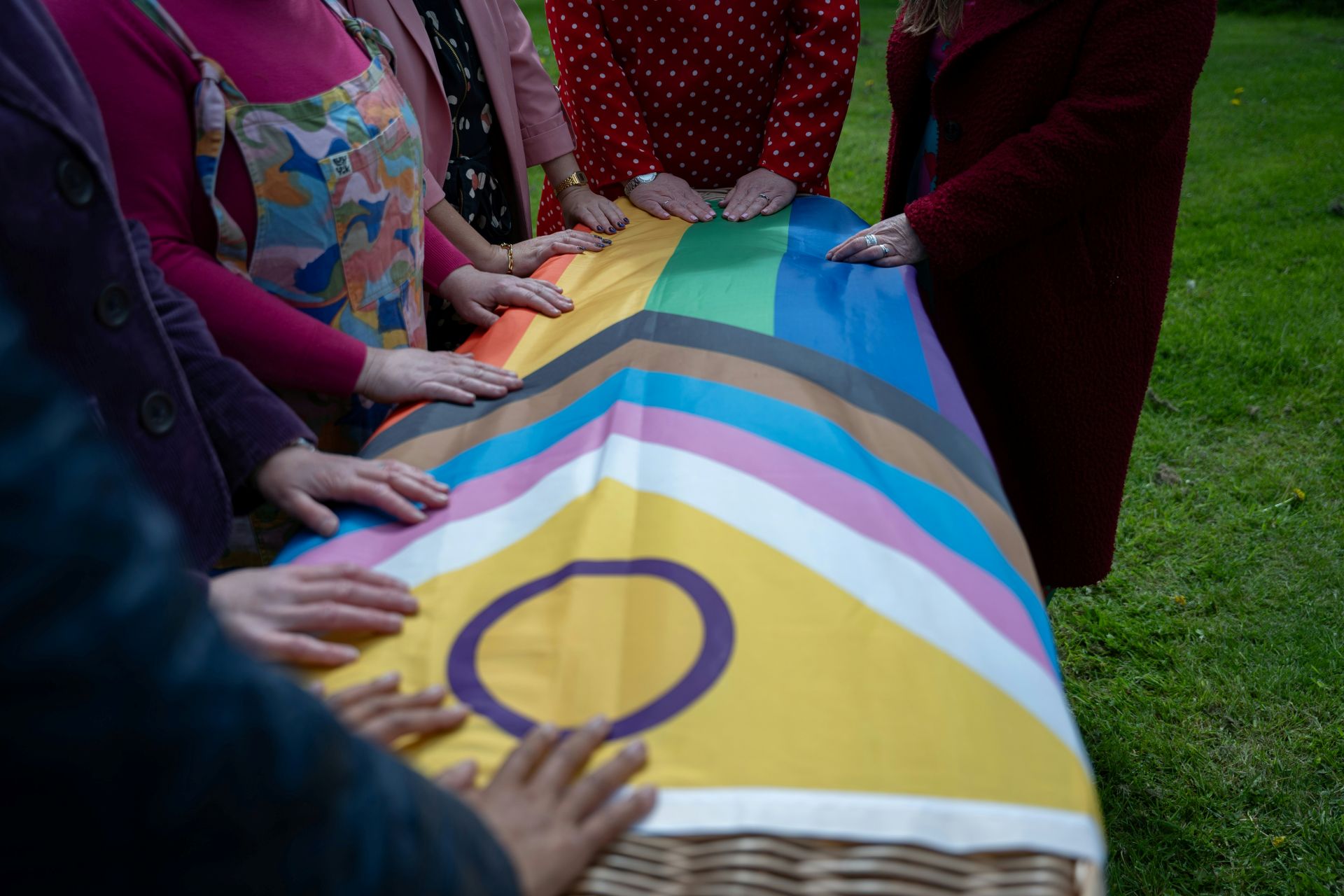
Photo by DEAD GOOD on Unsplash
The right to be remembered as yourself
Imagine spending a lifetime finding the courage to live authentically, and then having that erased at the very end.
It happens more often than people realise. A person is deadnamed in their eulogy. A same-sex partner is sidelined by estranged biological family. A non-binary person’s pronouns are ignored in the order of service. A transgender woman is dressed in clothes that deny who she was.
These are not edge cases. They are experiences shared quietly across the LGBTQ+ community, passed between friends who have watched loved ones buried beneath identities they spent their lives escaping.
A funeral is one of the most profound acts of witness we have. It says: this person existed, this person mattered, this is who they were. When that witness is distorted, the loss is compounded in ways that can take years to process.
Everyone deserves a farewell that is true to who they are.
Photo by The Good Funeral Guide on Unsplash
Why LGBTQ+ inclusion in funeral planning matters
For LGBTQ+ individuals, end-of-life planning carries a weight that their straight, cisgender counterparts often do not have to consider in the same way.
Legal protections may not be enough
Even with a legal spouse or civil partner, there are situations where biological family can contest wishes, particularly where relationships were strained or estranged. Having clear, legally documented advance directives including a will, a Lasting Power of Attorney and explicit funeral wishes is especially important for LGBTQ+ people.
Chosen family must be recognised
For many in the LGBTQ+ community, chosen family are the people who showed up when blood relatives did not. They are often the people who knew someone best and loved them most. Funeral planning should centre these relationships, not treat them as secondary.
Gender identity and expression matter in death
Transgender and non-binary people have the right to be dressed, presented and referred to in alignment with their gender identity. This includes in death. Funeral directors should ask, not assume, and families should honour documented wishes.
Grief does not discriminate, but support systems sometimes do
Bereavement support is not always LGBTQ+ inclusive. When a same-sex partner loses their spouse, their grief can be minimised or misunderstood by services that were not designed with them in mind. Seeking out celebrants, counsellors and communities who genuinely understand the LGBTQ+ experience of love and loss is a valid and important need.

What an inclusive funeral can look like
An inclusive funeral is not a political statement. It is simply a funeral that tells the truth about a person’s life.
It might be led by a celebrant who works with the family to craft a tribute that honours who the person truly was, free from religious frameworks that may not have affirmed their identity in life. It might include meaningful symbolism, rainbow colours woven through the flowers, a favourite piece of music, or a reading chosen by a partner or a chosen-family member.
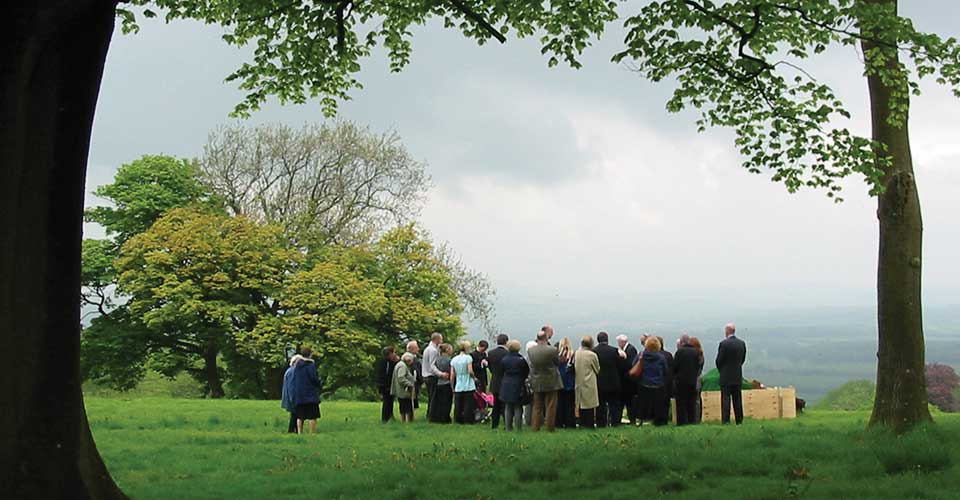
It might be held somewhere unexpected. A woodland, a garden, a beach. Somewhere that feels open and natural. It might be led by the community itself – friends gathered to speak and share stories and laugh and cry, without a prescribed order of service, in whatever way feels true.
Natural and eco-friendly funerals lend themselves beautifully to this kind of personal, boundary-free farewell. A woodland burial, for instance, offers open space, no time pressure, and a setting that feels nothing like a conventional ceremony. Families and friends can gather in their own way, for as long as they need, in a place that feels alive.
Cardiff & The Vale Burial Ground
A note to LGBTQ+ people planning ahead
If you identify as LGBTQ+ and are thinking about putting your wishes in writing, we want to encourage you to do it, not because death is imminent but because doing so is an act of self-determination. It is a way of making sure that the people you love know how to honour you.
You might consider writing a letter of wishes to accompany your will, detailing exactly how you would like your funeral to be conducted: your name, your pronouns, your music, your people. You might talk to a green funeral provider who will listen without assumption. You might name a funeral planning spokesperson – someone you trust, who knows you and will advocate for your wishes if others try to override them.
It is the kind of thing most of us put off. But taking the time to write your wishes down and have those conversations will make an enormous difference to the people who will one day plan your funeral and celebrate your life.

A note to families and friends
If you are supporting an LGBTQ+ person through bereavement, or helping to plan a funeral for someone from the community, the most important thing you can do is listen and follow. Follow their documented wishes. Follow the lead of the people they named as important. Follow their identity, not your assumptions or discomfort.
If you are a family member who was estranged, or who found it difficult to fully accept the person’s choices, this is not the moment to rewrite history. The most loving thing you can do is let them be honoured as they truly were.
In memory and in celebration
Pride Month began as an act of remembrance, for those lost to AIDS, to violence, to a world that too often refused to see them. It has always been bound up with grief as much as joy.
So this June, we take pride in celebrating lives fully lived and in the right we all have to be remembered truthfully.
